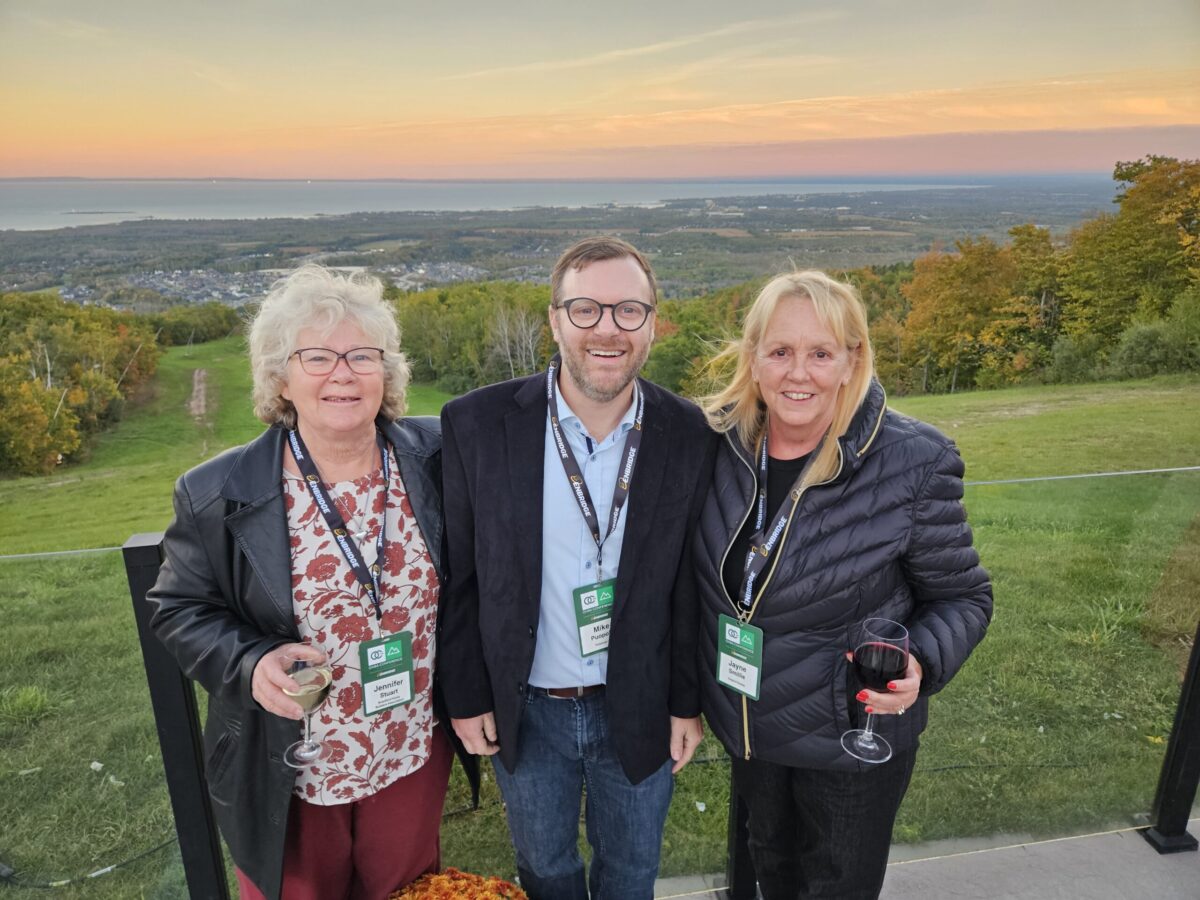
The Ontario Home Builders’ Association held its 2026 Annual Conference and Annual Meeting of Members September 27–29 at Blue Mountain Resort in Collingwood, bringing together builders, developers, renovators, association leaders, government representatives and industry partners from across Ontario.
A central theme throughout the conference was the need to continue reducing the cost and complexity of delivering housing. Discussions focused heavily on development charges, infrastructure funding, approval timelines, modernization of the Ontario Building Code, energy requirements, municipal processes and the cumulative impact that government-imposed costs and delays have on housing affordability.
Provincial Government & Housing Policy
One of the conference highlights was the Ministers’ Panel moderated by political columnist Brian Lilley. Participating were Minister of Municipal Affairs and Housing Rob Flack, Minister of Environment, Conservation and Parks and Acting Minister of Infrastructure Todd McCarthy, Minister of Public and Business Service Delivery and Procurement Stephen Crawford, Minister of Red Tape Reduction Andrea Khanjin, and Associate Minister of Municipal Affairs and Housing Graydon Smith.
The discussion emphasized the need for government and the residential construction industry to work together to increase housing supply. Topics included development charge reform, infrastructure investment, streamlining municipal and provincial approvals, greater use of qualified professionals, modernization of regulatory processes and enforcement against illegal building.
The message heard repeatedly throughout the conference was that Ontario cannot address housing affordability simply by building differently — the overall system used to approve, finance, service and regulate new housing also needs to become faster, more predictable and less costly.
OHBA Advocacy – “Raising the Standard”
OHBA also outlined its 2026 advocacy strategy, Raising the Standard, which moves the association toward specific, practical policy recommendations aimed at producing measurable housing outcomes.
Key priorities include reducing government-imposed costs associated with housing delivery, improving infrastructure financing, modernizing Ontario’s Building Code, improving the approvals process through qualified professionals and peer review, addressing illegal building, improving integrated energy planning and strengthening the professional renovation sector.
The strategy reinforces the importance of Ontario’s local Home Builders’ Associations working collectively with OHBA. Local associations provide the municipal experience, member feedback and grassroots advocacy that strengthens OHBA’s provincial work.
Building Code, Energy & Approvals
Several sessions looked ahead at changes affecting how homes will be designed, approved and constructed.
There was considerable discussion around modernizing Ontario’s Building Code while maintaining health and safety standards. The objective is to eliminate unnecessary complexity, improve consistency between municipalities, support innovation and prevent regulatory requirements from adding unnecessary costs to new housing.
Energy efficiency and higher-performance construction were also important topics. While industry supports building better-performing homes, speakers acknowledged that new requirements and technologies have upfront costs. Finding practical ways to improve performance without making new homes less affordable will continue to be an important industry issue.
Leadership & the Role of Local Associations
The Annual Meeting of Members and leadership discussions reinforced the importance of a strong relationship between OHBA, local associations and the Canadian Home Builders’ Association.
Outgoing leadership reflected on significant advocacy work undertaken over the past year, while incoming leadership emphasized continuing a model based on strong advocacy, credible data, government relationships and active participation from local associations.
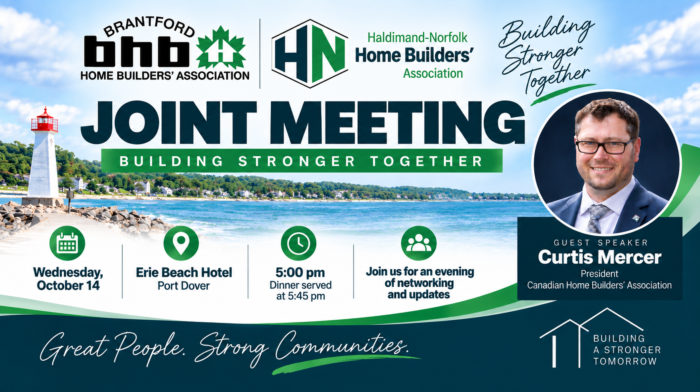
CHBA President Curtis Mercer was also in attendance, reinforcing the importance of coordination between the local, provincial and national levels of our association.
One of the strongest messages coming out of the conference was that successful advocacy requires all three levels of the federation working together. Provincial and federal policy may set the framework, but local associations and their members provide the real-world examples of how those policies affect housing projects and affordability in our communities.
Moving Forward
The 2026 conference demonstrated that housing affordability remains much more than a single policy issue. Development charges, taxes, infrastructure, approvals, servicing, energy policy, building codes and regulatory requirements all ultimately affect the price and availability of housing.
For the Brantford Home Builders’ Association, many of the provincial discussions closely reflect the issues we are already working on locally, including development charges, infrastructure capacity and funding, planning and approval timelines, energy requirements and the cumulative cost of bringing new housing to market.
BHBA will continue to bring the Brantford and County of Brant perspective to these discussions and work with OHBA and CHBA to ensure that our members have a strong voice at the municipal, provincial and federal levels.
The overall message from Blue Mountain was clear: meaningful progress on housing will require continued collaboration between industry and government, practical policy changes and a strong, coordinated association network.